Over a quarter of a million women in the US are diagnosed with uterine fibroids annually. This is almost certainly a gross underestimate since a potentially large percentage of women who have them are never diagnosed with the condition. The symptoms they can produce, such as heavy menstrual bleeding, pelvic pain, and frequent urination, are often not considered severe enough to seek medical attention or might even be considered “normal” because they’ve been present throughout the reproductive years.
In the conventional world uterine fibroids are typically treated in one of four ways: do nothing if asymptomatic, prescribe pain medications such as NSAIDs, prescribe estrogen-modifying medications, or remove them surgically. While medications or surgery might mitigate or even eliminate the symptoms fibroids can cause they don’t address the primary underlying cause of fibroid growth: excessive exposure to estrogen.
Estrogen leads to cell proliferation. The follicular phase of a woman’s menstrual cycle is dominated by estrogen, a time (from the first day of menses until ovulation, typically about 14 days) when the uterine lining builds up. In contrast, the second half of the cycle (called the luteal phase) is dominated by progesterone. Progesterone in many ways counteracts the activity of estrogen, leading to the breakdown of the uterine lining, which ultimately gets flushed out with the next menses.
From a naturopathic perspective fibroids are not treated by simply blocking the estrogen receptors, but rather by enhancing the liver’s ability to adequately metabolize and detoxify estrogen and get those metabolites excreted from the body. This detoxification/excretion process involves both Phase I and Phase II enzymes in the liver and requires methylation, glucuronidation, sulfation and other enzymatic activity. It also requires healthy bowel function to move many of these metabolites out of the body once they are bound to bile acids and dumped into the gut.
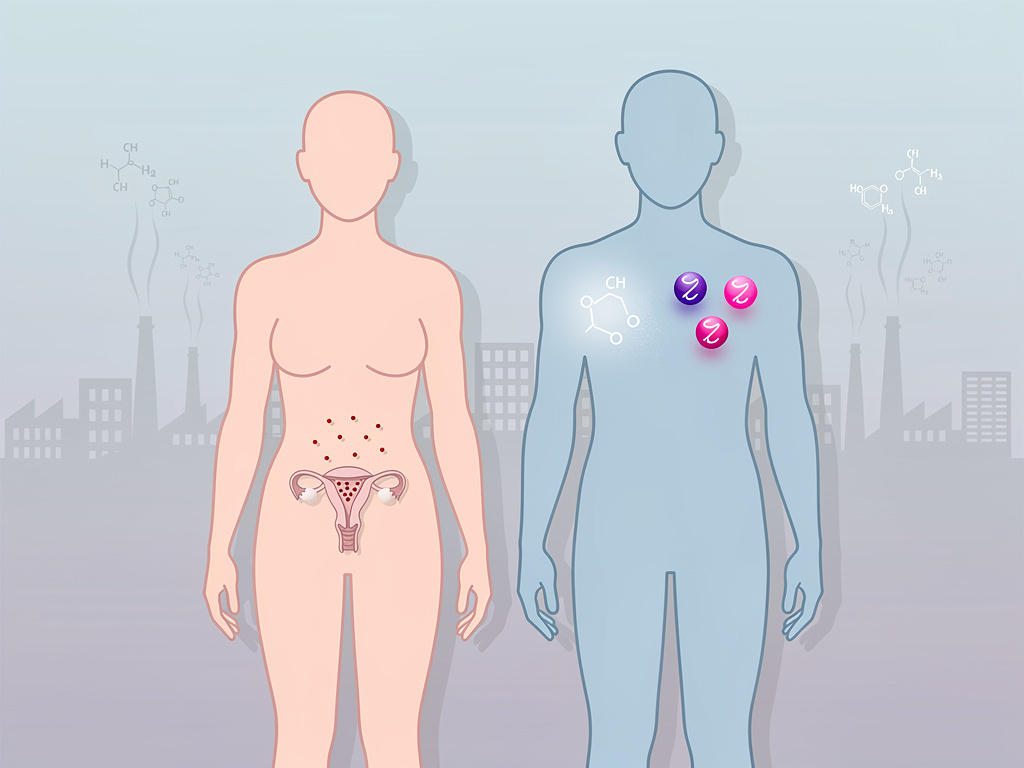
So why should men be concerned about uterine fibroids, too? Because just like women, men also produce estrogen and so have estrogen receptors as well, though of course far fewer than women. They produce estrogen through the activity of an enzyme called aromatase, which converts testosterone to estrogen. And the punch in the gut is that several common environmental pollutants can enhance the activity of the aromatase enzyme, causing too much testosterone to convert to estrogen in males and bringing with that a host of symptoms that can include weight gain and breast enlargement, low libido, loss of muscle mass, increased cardiovascular risk, and others.
These and other pollutants are called xenoestrogens. They get that label because they are synthetic chemicals used in agriculture, production of plastics, as body-product additives, and elsewhere; they have estrogen-like properties; and they can bind to/stimulate estrogen receptors in the body. For women this can promote fibroid growth and can also lead to increased breast cancer risk. For men this means yet another source of estrogen activity in the male body, driving the symptoms mentioned above.
Men should understand that exposure to excessive estrogen stimulation might manifest in a more salient way for women, such as growth of uterine fibroids. But men should also understand that the growth and prevalence of uterine fibroids is also highlighting their own exposure to both estrogens and xenoestrogens. In addition to other health consequences, both estrogen types can lead to a general lack of vitality for men and women both.
I commonly run a comprehensive test to assess patients’ exposure to and accumulation of environmental pollutants, including the xenoestrogens mentioned above. I also utilize salivary testing of estrogen, testosterone, and other steroid hormones to determine their relative abundance.
Once the specific chemicals are identified and quantified through testing, a program can be implemented that encompasses Phase I and Phase II liver detoxification, plus other therapies to enhance urinary, bowel, and other forms of excretion, moving those metabolites out quickly and efficiently. Whether male or female, if you would like to test for your exposure to pollutants and xenoestrogens and/or your level of these important steroid hormones, get on my schedule and we can talk through the testing options. With the results of that testing in hand we can put a plan in place to clean up any toxicants identified to help all of your cells work efficiently. Visit https://olivedrab-lyrebird-181492.hostingersite.com/schedule, email drnigh_info@olivedrab-lyrebird-181492.hostingersite.com, or call 503-719-4806. Mention you are interested in discussing the testing mentioned in this article (you have no obligation to do any testing) and get 15% off your consultation.