The Choline Example
Consider any given dietary supplement, choline for example. Choline is a phospholipid found in high concentration in the membrane of brain cells. Studies have linked high choline intake with improved memory, concentration, and other benefits.
Synthetic vs. Natural: Are They the Same?
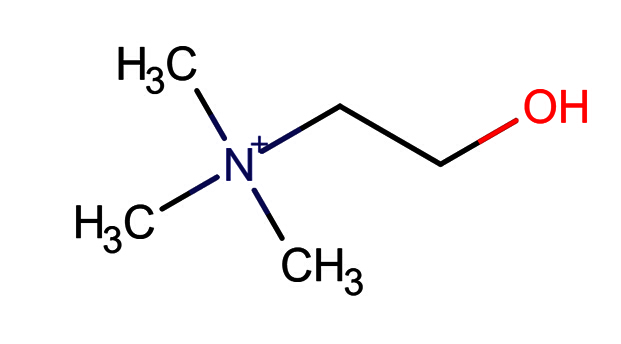
Choline has this molecular structure:
For a few decades in my clinical practice I would have argued that whether this molecule was derived from natural sources or produced through synthetic reactions in a lab, if those two are structurally identical they should have equal efficacy as a supplement. After six years of research into the biochemistry of deuterium, I am quite certain that I was sorely mistaken for all that time. It is virtually certain that synthetically produced nutrients, choline or otherwise, almost certainly do not have the same potential for benefit.
How Deuterium Makes a Difference
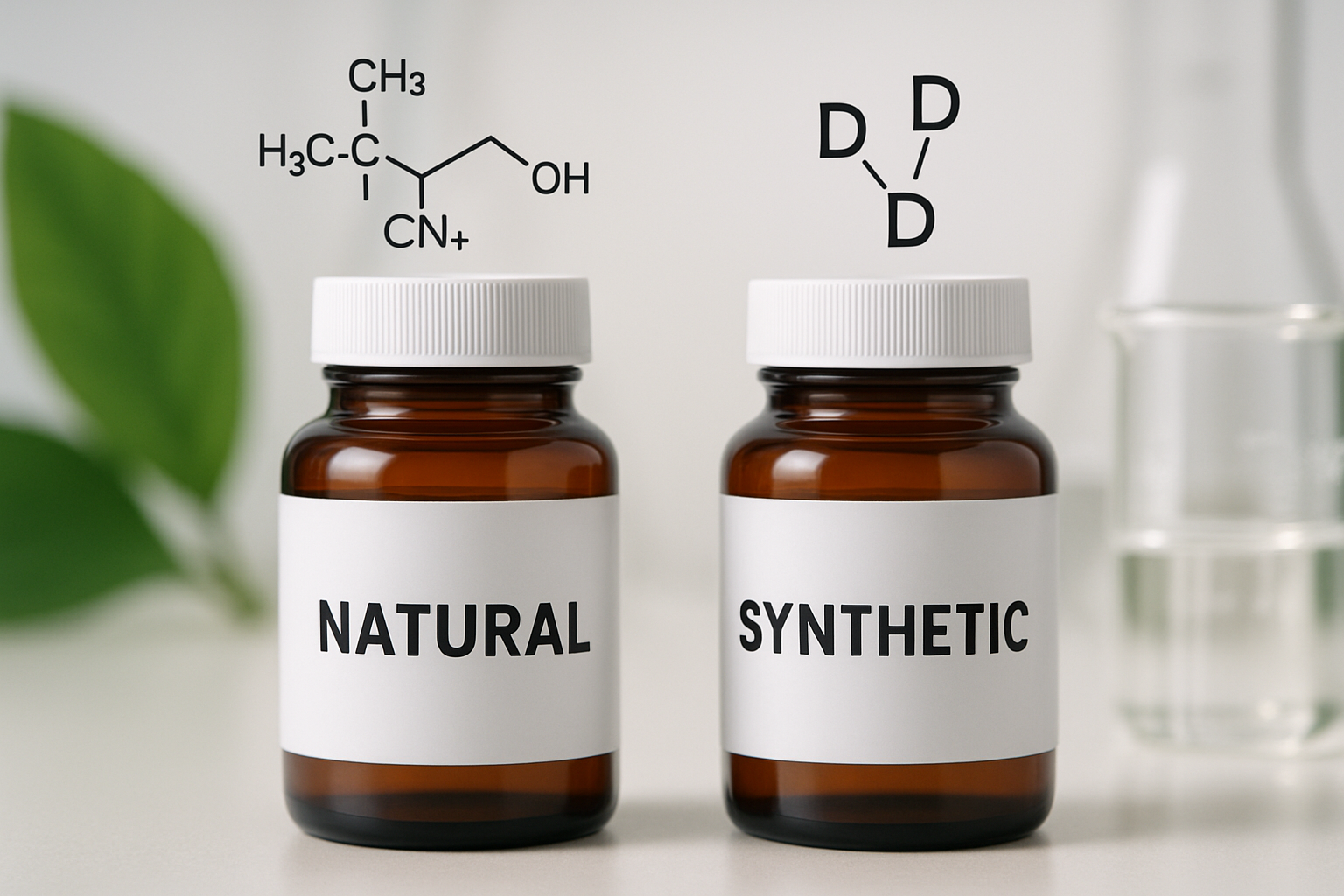
Choline comes in not only through our diet, but it is also manufactured by the bacteria resident in our guts. See those nine hydrogens bound to carbons within the choline molecule? When choline is produced naturally, whether in plants or animals, there are enzymes involved that make it extremely unlikely that any of those hydrogens is replaced by its naturally occurring isotope called deuterium.
Those methyl groups built into choline (-CH3) are therefore naturally deuterium depleted. When they participate in the methylation cycle in the body (extremely important for detoxification, hormone regulation, immune function, and much else), they are not bringing in deuterium that can interfere with all those functions. If one or more of those methyl groups did have a deuterium where a hydrogen should be, it could have far-ranging negative consequences depending upon where that methyl group ultimately ends up.
Risks of Synthetic Nutrients
Choline and many other nutrients sold as dietary supplements are now commonly manufactured through a series of chemical reactions in a lab (in choline’s case it is a form called choline bitartrate). This is much cheaper than extracting the nutrient from a natural source. However, this also means that the deuterium naturally present in the water used as a solute for these chemical reactions can be transferred onto the final product – choline bitartrate, for example – without being filtered out by the natural enzymes that play that role.
Why Practitioner-Grade Supplements Matter
Given my growing understanding of the detrimental impact of deuterium on cellular function, I no longer believe that synthetically produced and naturally derived supplements, even if molecularly identical, are equally beneficial for our health. I believe it is possible to see evidence that this is true when comparing intervention studies, one utilizing a synthetic choline with another using naturally sourced choline.
This is another reason I encourage my patients to purchase supplements manufactured and sold through health care professionals. Synthetically produced nutrients are the cheapest to manufacture, so are the type most likely to be in (cheaper) retail products. While the professional-line products are not assured to be naturally derived in all cases, my own monitoring of their products suggests that it is more likely.
Ongoing Research and Next Steps
I, Stephanie, and Anthony have another paper waiting to go through peer review which will explain the importance of these deuterium depleted nutrients for general health. Once it is published I will give a more thorough description of what we document there. In the meantime, if you would like to work with a practitioner who is paying attention to these kinds of details: https://olivedrab-lyrebird-181492.hostingersite.com/schedule, 503-719-4806, or drnigh_info@olivedrab-lyrebird-181492.hostingersite.com.